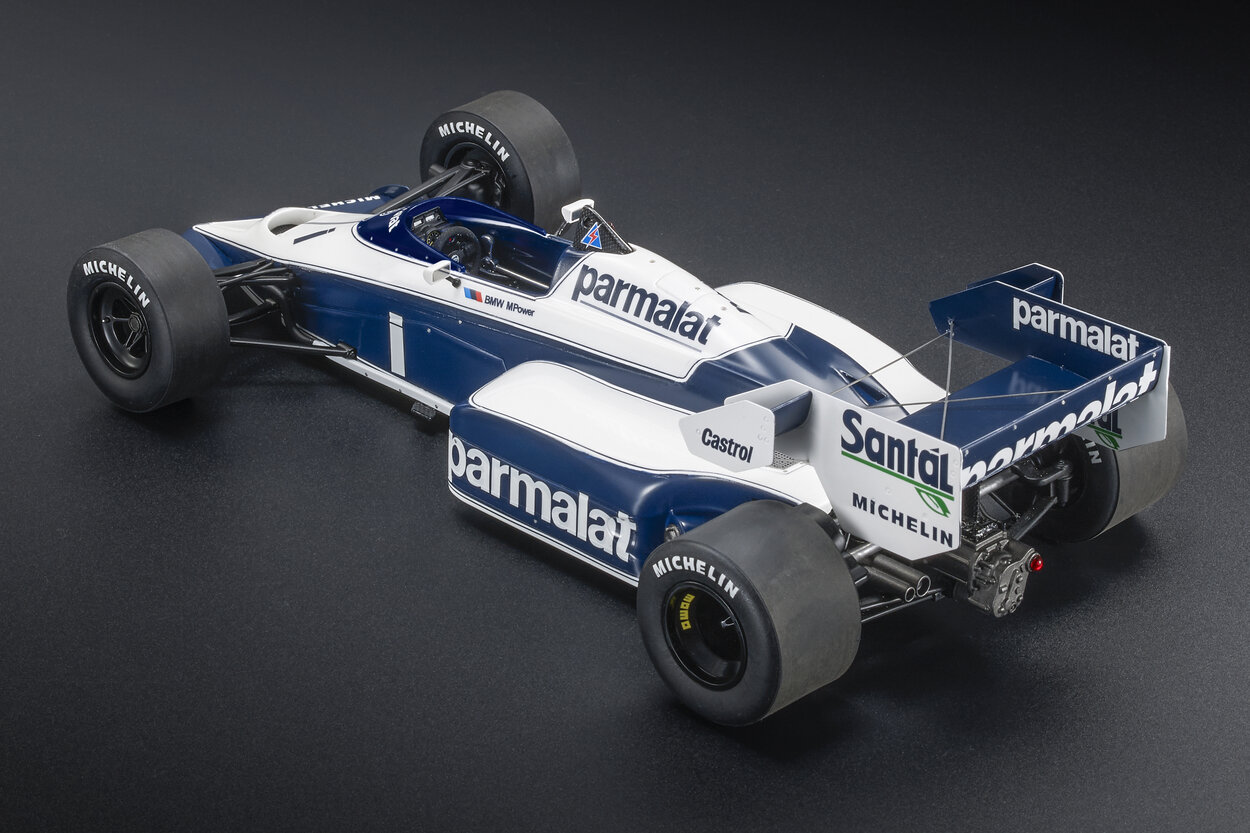
Brabham BT53
In 1984, Brabham and BMW entered the season as reigning world champions, thanks to the Drivers’ title Nelson Piquet had secured the previous year. The tense relationship between the two sides of the Anglo-German partnership—which in its early days had nearly jeopardised the relationship’s very survival—had by now turned genuinely cordial. Yet despite the championship success, reliability issues persisted in an engine that remained remarkably fragile.
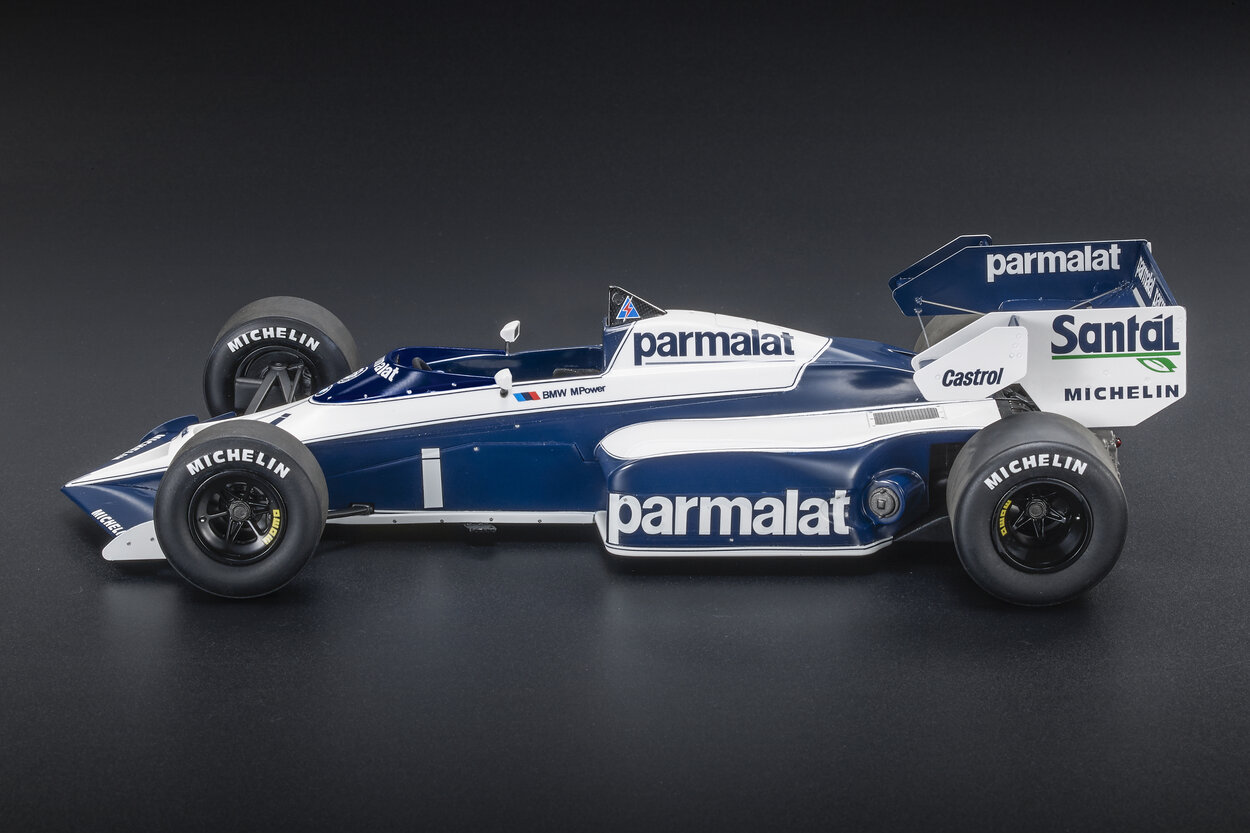
The defence of the world title was entrusted to the BT53, an evolution of the BT52 that had carried Brabham to the 1983 championship. Changes from the previous model were relatively minor. The BT53 was distinguished above all by its longer cockpit sidepods, introduced to address some of the handling issues encountered the year before. Fuel capacity was reduced to 220 litres in compliance with the new regulations, which also banned in-race refuelling and thus eliminated the quick-fill port. The most significant technical development was the adoption of carbon fibre for the chassis construction—a solution McLaren had already pioneered successfully since 1981.
Drivers:
Nelson Piquet: The fragility of the BMW engine—and indeed of the car as a whole during the first part of the season—undermined the Brazilian’s title defence. Yet from his hat, always full of surprises, Nelson Piquet—perhaps the most underrated of Formula One’s greats—pulled out two victories, at Montreal and Detroit, a second place at Zeltweg, and a third at the European Grand Prix on the new Nürburgring. To these results he added nine pole positions and three fastest laps in race conditions.
Teo and Corrado Fabi: With Riccardo Patrese gone, Brabham’s main sponsor—the Italian company Parmalat—still wanted an Italian driver in the team. The choice fell on Teo Fabi, who had taken pole position at the previous year’s Indianapolis 500. But because he was also committed to racing in North America, Teo could not guarantee his presence at every Formula One Grand Prix. Thus arose the idea of replacing him with his brother Corrado, who would take part in three races overall. In the other thirteen, Teo collected a fourth, a fifth, and a third-place finish.
Our model cars:
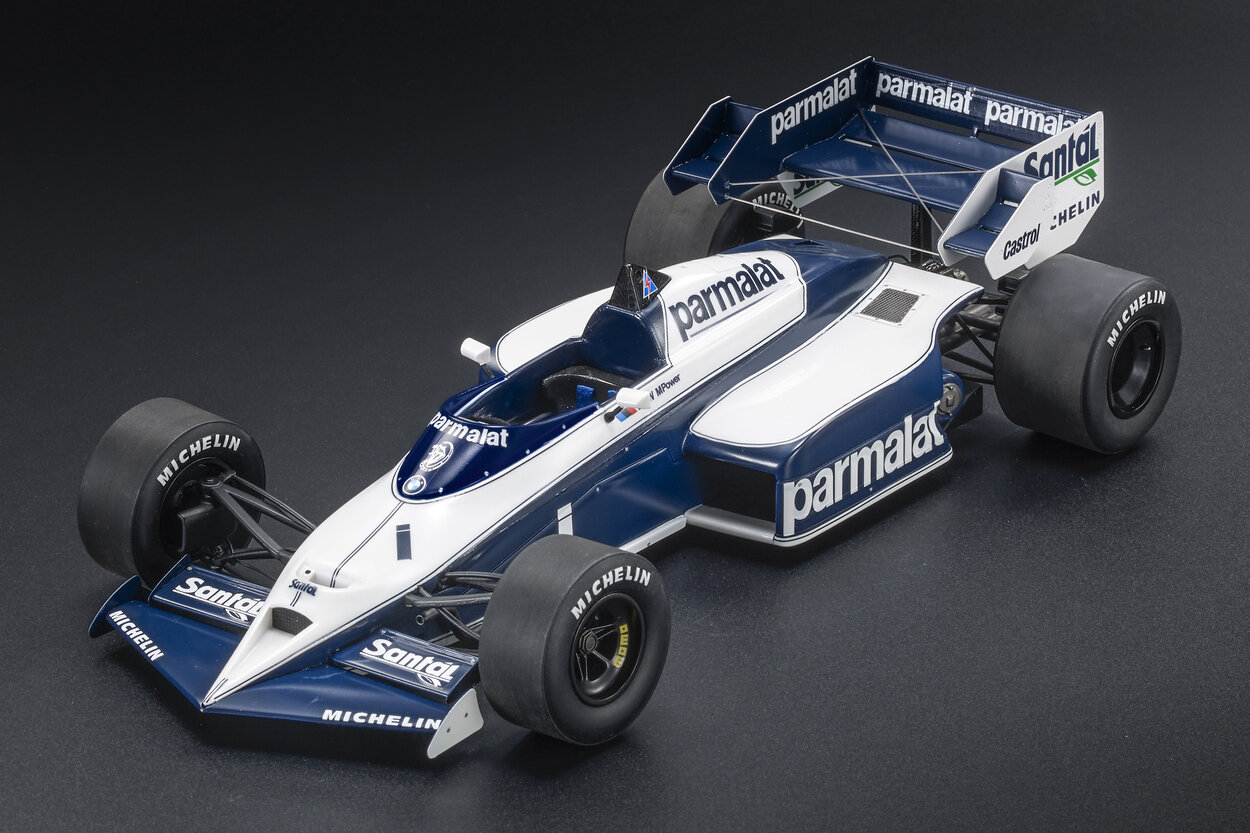
It was McLaren that would make life difficult for the BT53—and make Piquet’s title defence all but impossible. Yet despite the fragility of its engine, which forced the reigning champion into several retirements, the 1984 season was not without satisfaction. The BT53 won two of the sixteen races it entered, claimed nine pole positions—an impressive figure in any season—and set three fastest laps.