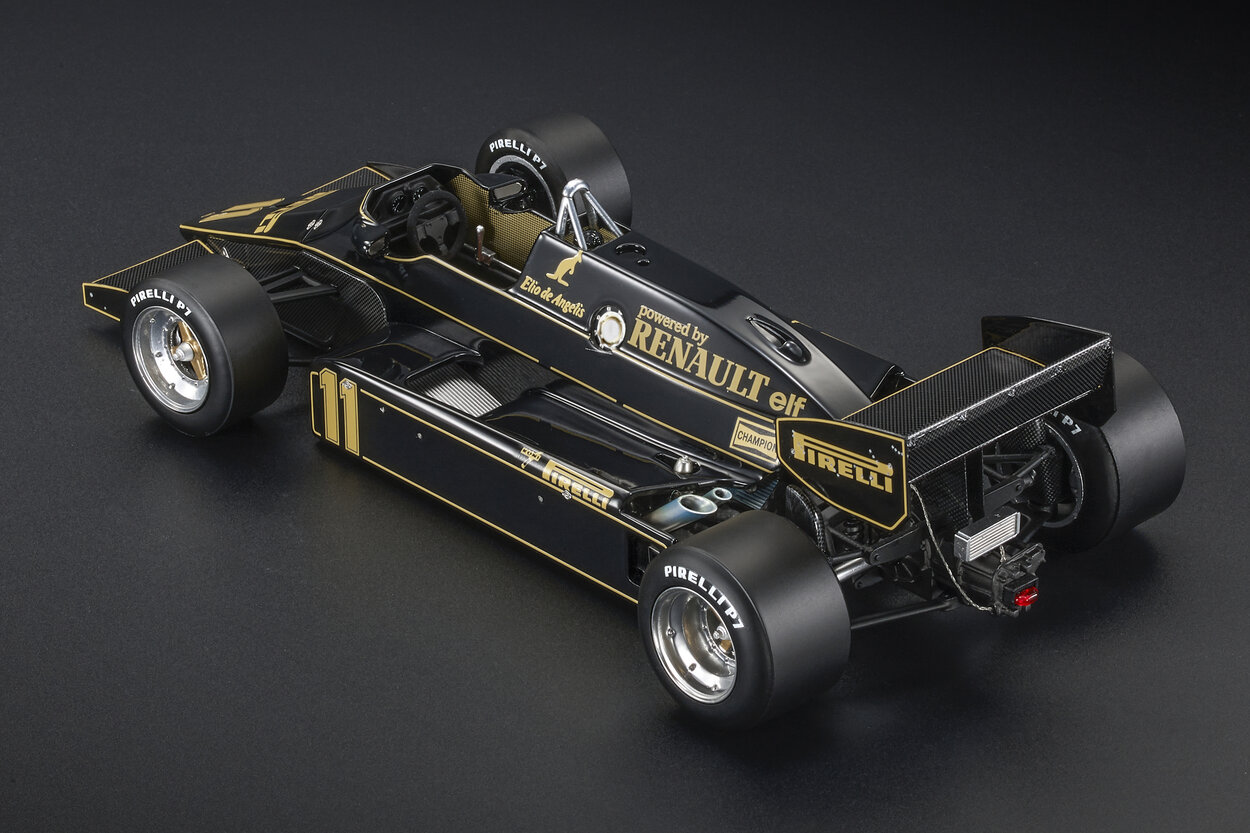
Lotus 93T
It was one of the least successful Lotus cars ever built. Out of nine World Championship races entered, it finished only one—an anonymous ninth place. Yet it remains a car of historical significance for two reasons: it was the first Lotus to be powered by a turbo engine, and it was the last Formula One car designed by Colin Chapman, who passed away in December 1982 before ever seeing it run on track.
The Lotus 93T was powered by the Renault EF1, a 1.5-litre turbocharged V6 paired with a Lotus/Hewland gearbox. For tyres, Chapman chose to rely on Pirelli, which was making its return to the top tier of motor racing. At first, the car impressed. “The Renault engine is a bomb, the chassis outstanding,” declared Elio de Angelis over the winter. In the end, however, the 93T proved quick in qualifying but utterly unreliable in race conditions—a fate it shared with many teams of the era making the transition from naturally aspirated to turbocharged power.
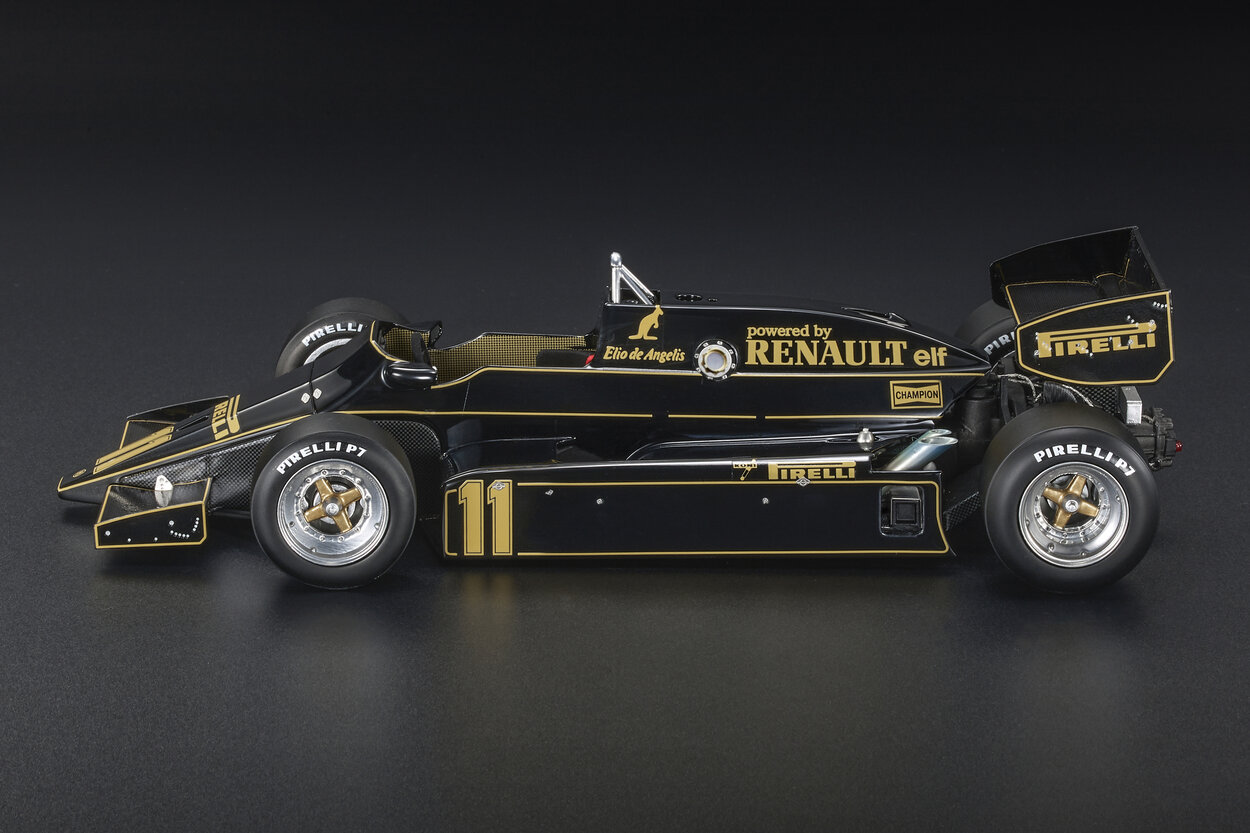
Drivers:
Elio de Angelis: After taking his first career victory in the summer of 1982 at the wheel of a Lotus, the Italian driver entered 1983 with high expectations. But Chapman’s death left Lotus without leadership—and Elio without his mentor. The 93T, which had initially seemed so full of promise, turned out to be a flawed—or at least unfinished—project. Elio struggled to keep pace with his rivals—not so much in qualifying as in race conditions. He managed to bring the car home in only one of the eight Grands Prix he entered: at Spa, where he finished ninth.
Nigel Mansell: The story of Nigel Mansell’s relationship with the Lotus 93T is, in essence, the story of a bond that never began. Mansell helped develop the car alongside de Angelis during the difficult winter of 1983, following Chapman’s unexpected death, but he was given the chance to race it only once that entire season—by which time his teammate had already moved on to the new model.
Our model cars:
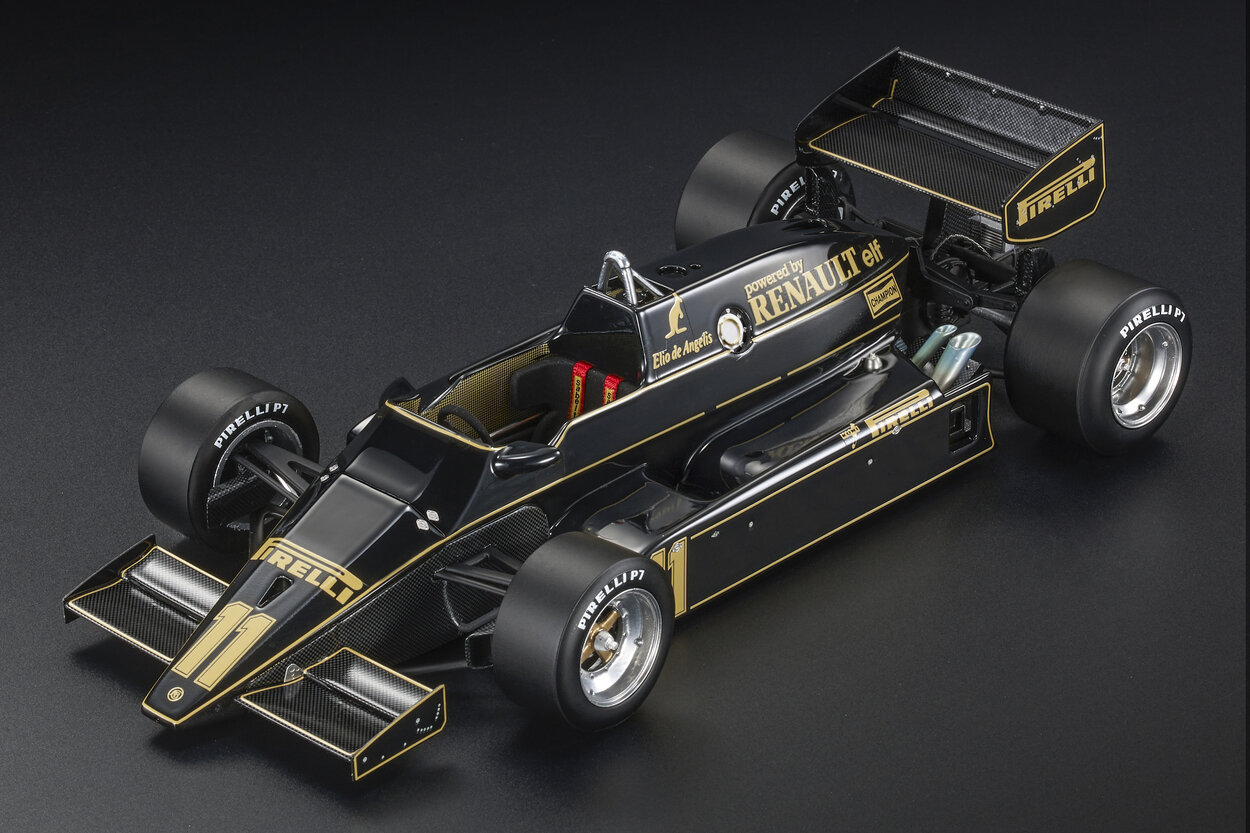
The 93T was driven almost exclusively by Elio de Angelis, Lotus’s lead driver, while his teammate Nigel Mansell continued to race the previous year’s car. Mansell took the wheel of the 93T only once—aside from the winter testing sessions—at Hockenheim, where he qualified a forgettable seventeenth and retired from the race soon after.
Given the troubled development process, Martin Ogilvie—who had co-designed the car alongside Chapman—soon decided to begin work on its successor, which would in fact replace the 93T from the summer onwards.